
Finding Residents Across Westmont
Westmont resident records are divided by purpose. DuPage County keeps deeds, parcel data, election records, vital records, and court files. The Village keeps meeting records, ordinances, licenses, permits, code files, Police records, and staff contacts. A household may appear in one source and not another. Owners appear on parcel cards, while a person connected to a deed may be a past owner, lender, trustee, or lienholder. Election tools confirm an individual registration but do not create a public household list.
Choose a starting key, then seek a second match. An address is strongest for a parcel and deed trail. A full name works better in court, directory, business, and unclaimed-property searches. A year or event location matters for vital records and genealogy. Renters, minors, unregistered voters, and people protected by confidentiality rules may leave little public address evidence. Absence from one index is not proof that someone did not live in Westmont.
- Search the DuPage property roll by address, PIN, owner, or billing name.
- Carry the PIN into the parcel map and Recorder index.
- Use the official election or court search only for the person being checked.
- Move older names into Westmont directories, newspapers, and archive catalogs.
- Ask the correct custodian for a narrow record when no online index exists.
Westmont's Four Records Desks
Jurisdiction is the first filter. Westmont is an incorporated village, while Wheaton is the DuPage County seat. The Recorder handles recorded land instruments. The county property system supplies assessment and tax views. The Circuit Clerk maintains state trial court records. Westmont's Clerk and departments remain the right custodians for local minutes, ordinances, permits, complaints, and Police files. Sending a permit request to the county Recorder will not find the municipal file.
Office hours and entrances can change. Check the custodian's current page before an in-person trip, especially when construction or maintenance affects access.
Westmont Property Names and PINs
The DuPage Property Records Search connects a street address or owner name to a property index number, called a PIN. It can expose tax, assessment, transfer, exemption, appeal, map, owner, billing, and situs views. Situs means the physical property address. A billing address is where a notice goes and may be elsewhere. That difference prevents a common false match.
| Search route | Useful input | Best result |
|---|---|---|
| Address | House number, direction, street name | Parcel card and PIN |
| Owner | Last or business name | Matching ownership records |
| PIN | Ten-digit parcel number | Exact parcel and linked views |
| Map | Township, section, or nearby parcel | Spatial context |
The official lookup was displaying maintenance language during research, yet an indexed Westmont parcel card remained reachable. Preserve the URL and use the office or GIS fallback when the live form is down.
The official DuPage property search is shown below. Its separate entry modes matter because an old owner name may not match the current roll.
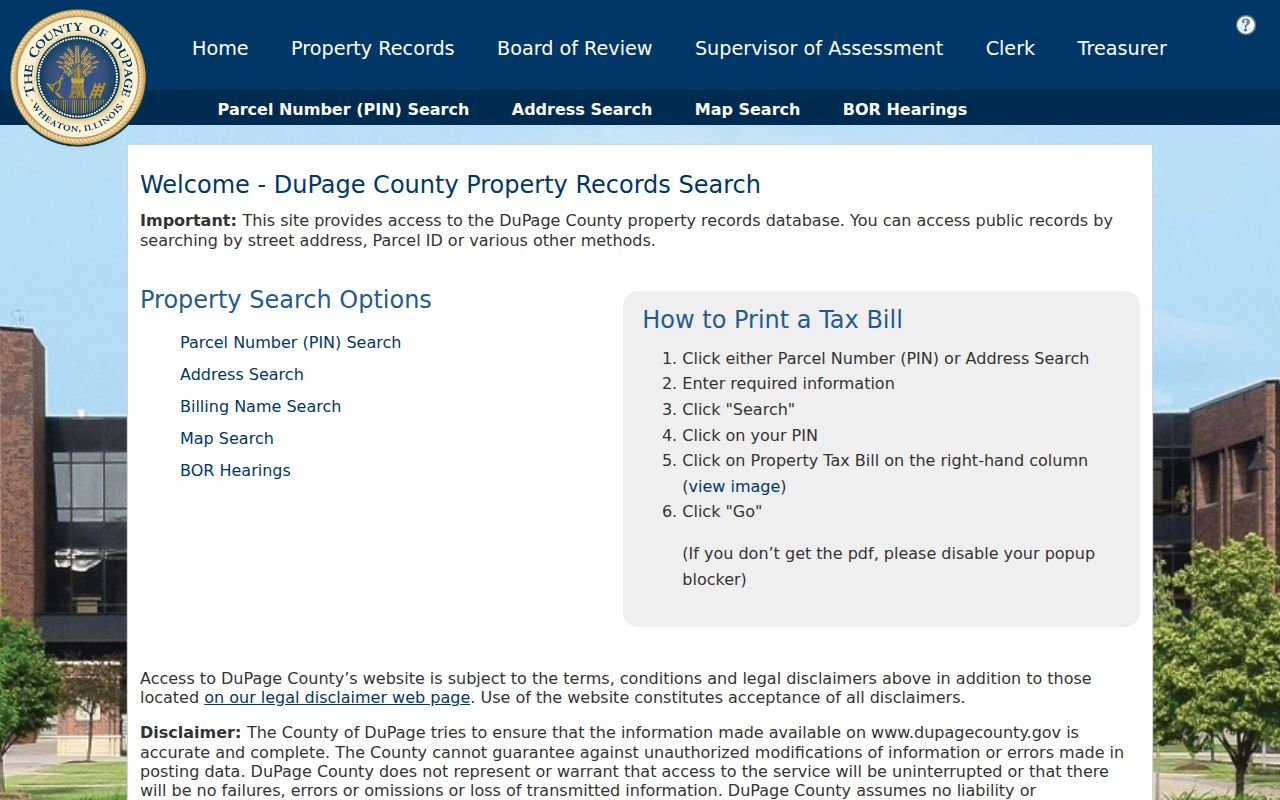
The screen is a route into official parcel data, not a complete list of everyone at an address.
Westmont Deeds Span Four Eras
The DuPage Recorder index reaches different years according to the key used. Online name searches begin March 16, 1961. PIN searches begin in 1985, and address searches begin in 1995. In-person property research reaches back to 1839. A gap in an address search may therefore reflect coverage rather than a missing deed. Start with the current PIN or owner, then follow grantor and grantee names backward.
- Grantor
- The person or entity transferring an interest.
- Grantee
- The person or entity receiving that interest.
- Index
- A finding aid that points to a filed document.
- Parcel
- A mapped unit of land identified by a PIN.
The official search accepts name, address, PIN, document number, date range, and document type. It may offer a view or print link when an image is available. The live page showed a system-down notice on the inspection date. The Recorder's office, research phones, and public terminals are the proper fallbacks.
Current Westmont Directory Sources
Each current source lists a defined group, not all Westmont residents. Property records identify owners and taxing relationships. The staff directory identifies public employees by department. Court data describe cases, while election tools answer voter-specific questions. Compare the record's purpose and date before treating two same-name entries as one person.
| Public source | People represented | Custodian | Channel |
|---|---|---|---|
| Property Records Search | Current parcel owners and billing names | DuPage County | Web, office, phone |
| Recorder Online Documents | Parties to recorded instruments | Recorder of Deeds | Web index, terminal, copies |
| Voter Search | The registered voter being queried | Election Division | Controlled web lookup |
| Village Staff Directory | Westmont departments and staff | Village of Westmont | Free web directory |
| Circuit case search | Parties in public state cases | 18th Judicial Circuit Clerk | Web, copy order, courthouse |
The Westmont staff directory supports department category, first-name, and last-name searching.
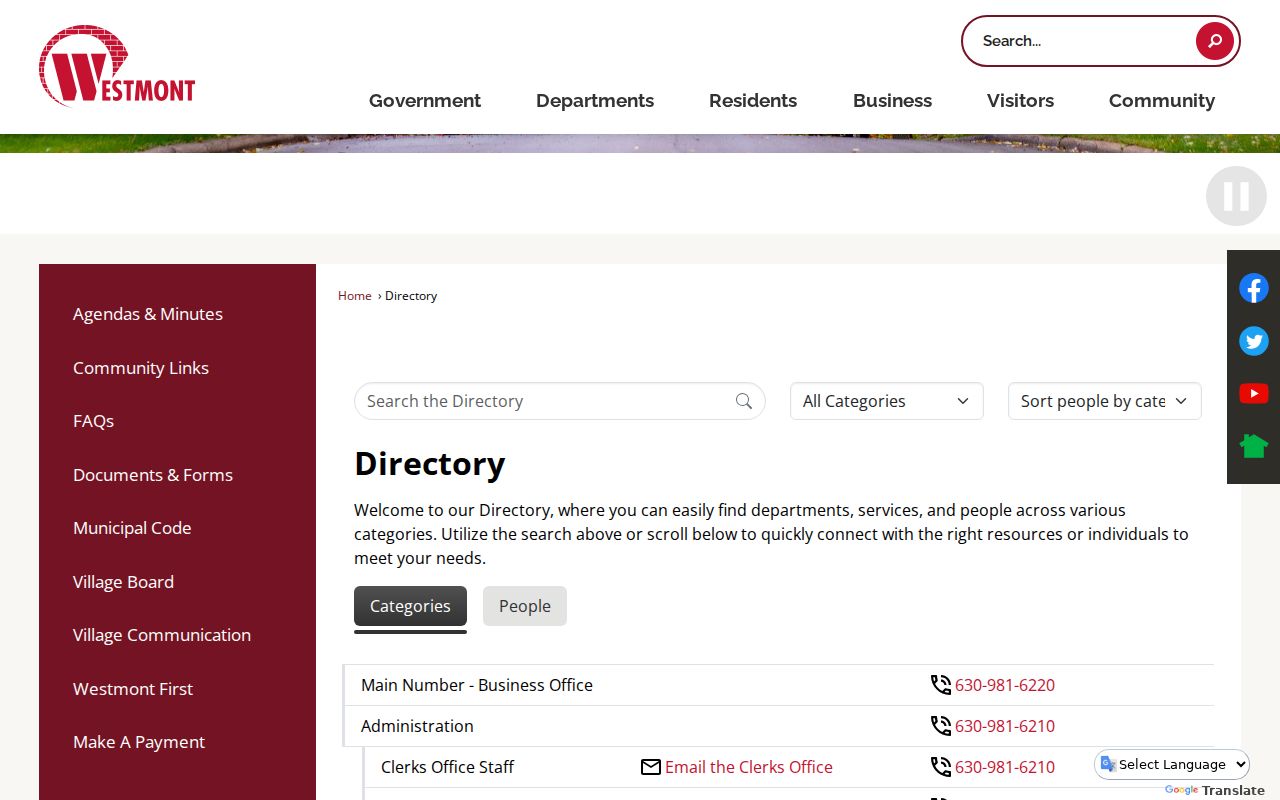
Use it for official roles and contacts, not as evidence of a person's home address.
Westmont Voter Search Fields
The DuPage voter search asks for identifying data to return an individual's registration, polling, district, or ballot information. Visible routes include last and first name, date of birth, the last four digits of a Social Security number or an Illinois driver's-license number, and address or district choices. State law under 10 ILCS 5 limits computerized voter data to authorized purposes. It is not a bulk directory for marketing or publication.
The captured county entry screen shows why a voter result requires more than a loose surname.
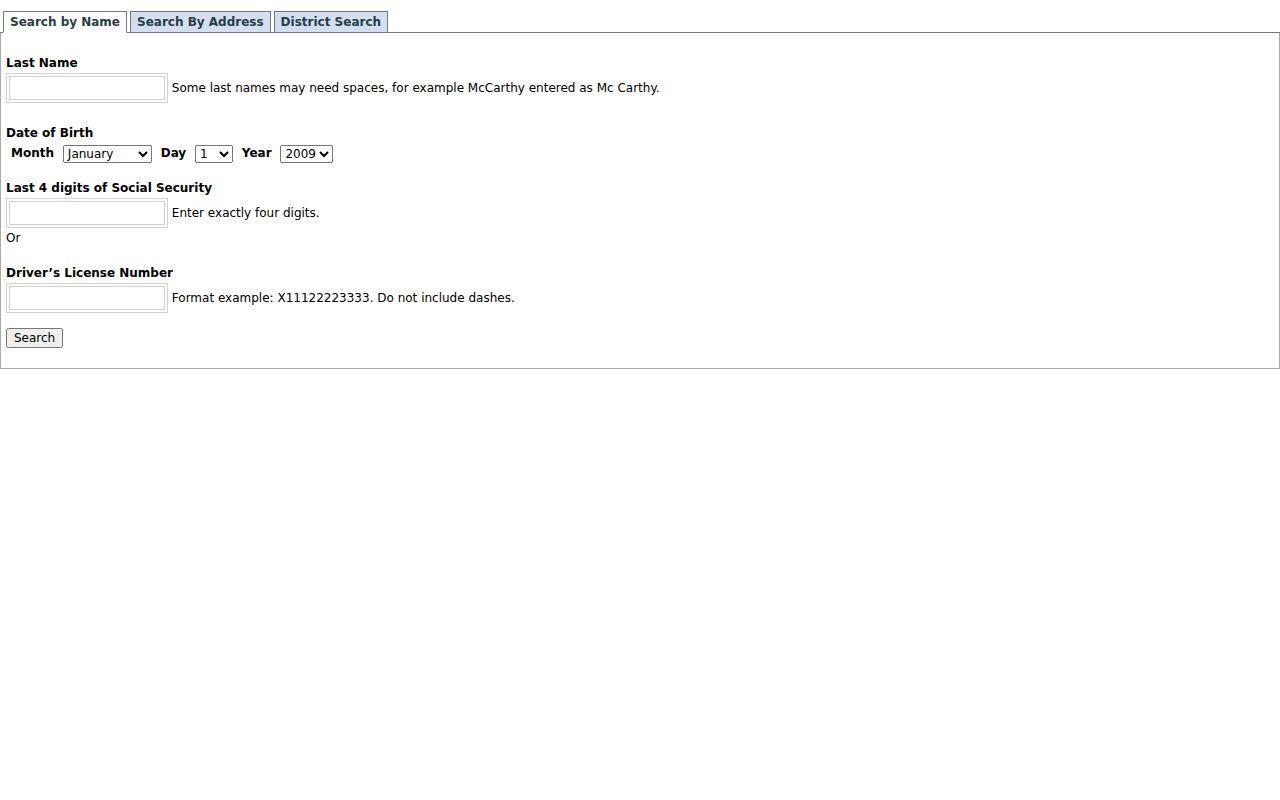
Use only your own or otherwise lawfully supplied identifiers, and carry the lookup date with any result.
Westmont Cases Need Context
Westmont state cases are maintained by the 18th Judicial Circuit in DuPage County. The Circuit Clerk public application says a successful search can show case status, the next court date, and docket entries. A docket is the dated list of filings and events in a case. Turnstile blocked a sample result during research, so the exact result columns were not inferred.
The public application is pictured at its official source.
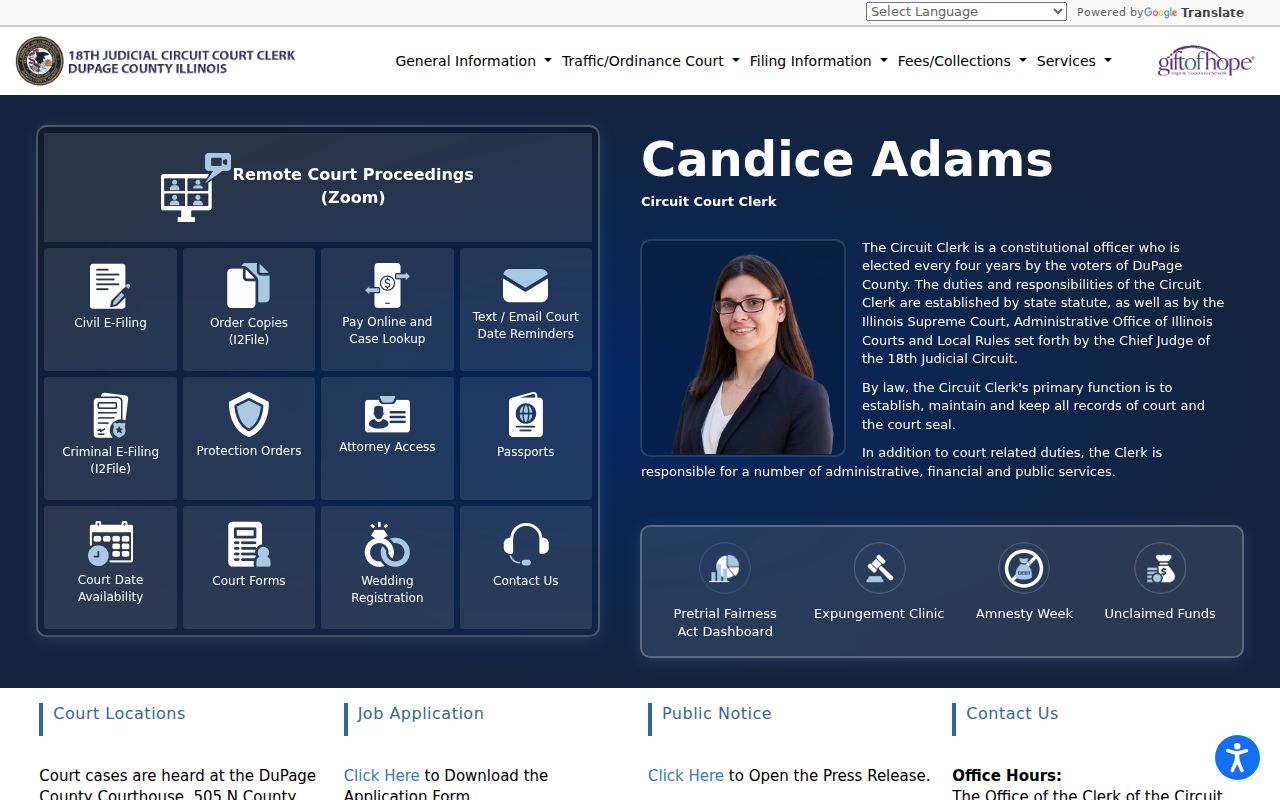
For a public copy, use the Clerk's I2File order route, visit the Wheaton courthouse, or contact the civil or criminal records desk. Sealed, expunged, impounded, juvenile, and inactive categories may be absent or restricted. A same-name case is never enough to establish identity.
Westmont FOIA Goes Local
The Illinois Freedom of Information Act, 5 ILCS 140, opens public records subject to exemptions. Westmont directs Village and Police requests through separate links. Ask Community Development for permits or code material and the Clerk for municipal records. County FOIA does not turn those into county files. An ordinary written request generally receives a response within five working days, with a possible statutory extension.
Describe the record, address or case number, date range, office, preferred format, and whether inspection or copies are wanted. Narrow requests work best. If part of a record is exempt, the agency may redact that part and release the rest. A denial should cite its basis and identify the responsible officials. The Illinois Attorney General Public Access Counselor is the administrative appeal route.
Westmont Vital Records Follow Events
A person's current Westmont address does not decide where a vital record is kept. The event does. DuPage County Health holds local birth and death events from 1953 forward, while the Illinois Department of Public Health provides state certificate and verification routes. Marriage copies come from the county where the marriage occurred. Divorce copies come from the Circuit Clerk where the dissolution was granted.
Modern certificates are restricted. Illinois birth copies require an eligible person or authorized representative. Death requests require a personal or property right or another lawful basis. IDPH offers genealogy routes for births at least 75 years old and deaths more than 20 years old but not before 1916. Separate archive thresholds in 410 ILCS 535/24 are 100 years for births, 50 for deaths, and 75 for marriages. Those rules should not be collapsed into one promise of online access.
The IDPH vital-record overview is the official state routing page. It also explains why a certificate request needs identity and eligibility evidence.
Westmont's Historical Resident Trail
Two digitized volumes form an unusually concrete starting point. The 1925-26 McDonough DuPage County directory includes Westmont residents, businesses, officials, civic facts, and rural entries. A 1927-28 Smith Directory Company volume covers Westmont with Downers Grove, Hinsdale, Naperville, and Western Springs. Entries can include a name, spouse, address or intersection, telephone exchange, work or civic role, and compact abbreviations.
The Westmont Public Library database desk offers in-library Ancestry access, Fold3, and local help. Digitized newspapers from the 1940s forward add obituaries, school news, clubs, businesses, and events. Some catalog ranges appear as “19uu” or “9999,” so staff confirmation is better than inventing an end year. The full shelf and entry-reading method belong in the Westmont city directory.
Six ZIP Areas Touch Westmont
The official 2023 Village map shows 60514, 60515, 60516, 60523, 60527, and 60559 touching Westmont's municipal boundary. Only 60559 is the primary Westmont postal identity. The others can carry postal labels for nearby communities while the parcel remains legally inside Westmont. Cass Avenue, 55th Street, school districts, sanitary districts, and township taxing layers add more boundaries that do not match a ZIP or the Village line.
Resolve a doubtful location through the PIN and parcel map before relying on a mailing city. The Westmont ZIP code directory separates postal geography from legal municipality.
Westmont Deed Alerts Are Free
DuPage County's Property Fraud Alert lets an owner register names for notice when a matching document is recorded. It is an alert, not a block on recording and not proof that every match is fraudulent. The Illinois Attorney General's 2026 title-theft material points residents toward free county alerts, Recorder checks, local law enforcement, and legal help rather than paid “title lock” claims.
The official alert page appears below.
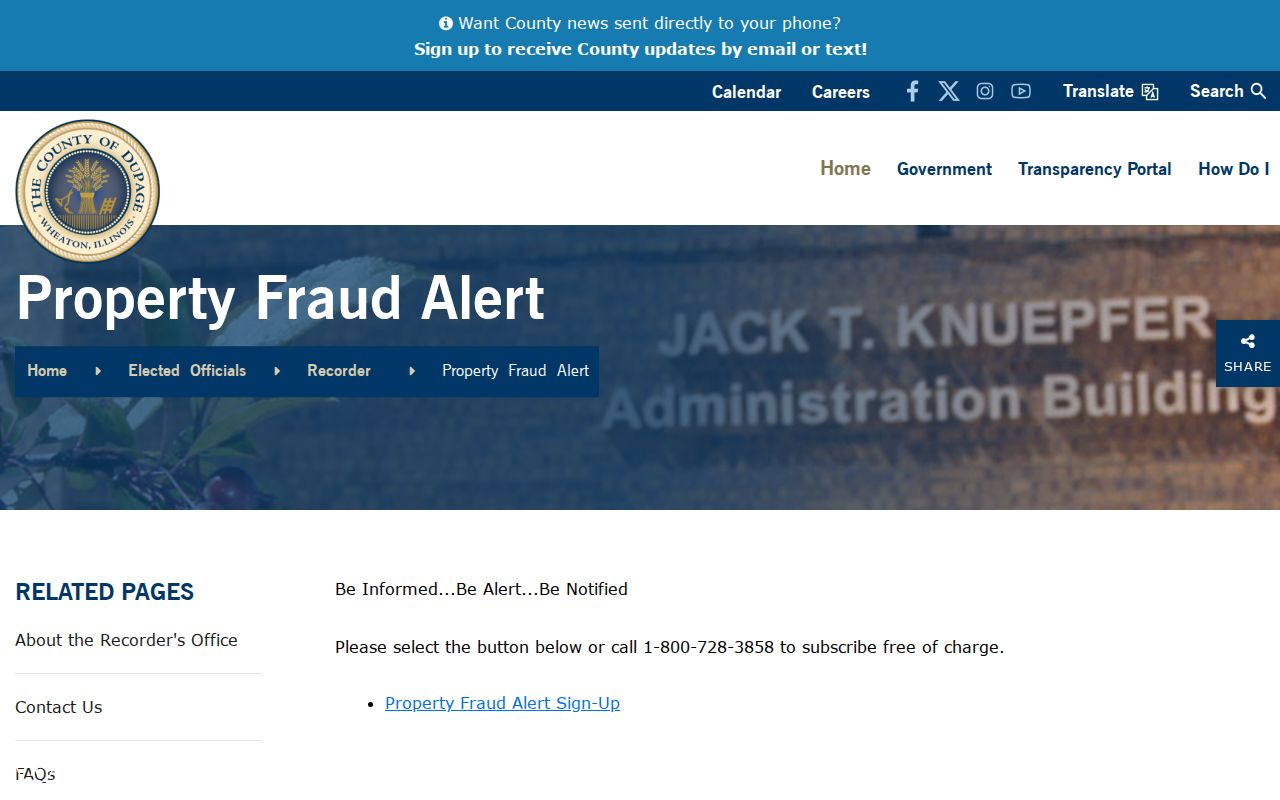
Keep the alert name close to the ownership name used in the Recorder index, then examine any notice through the official document record.
Westmont History Changes Searches
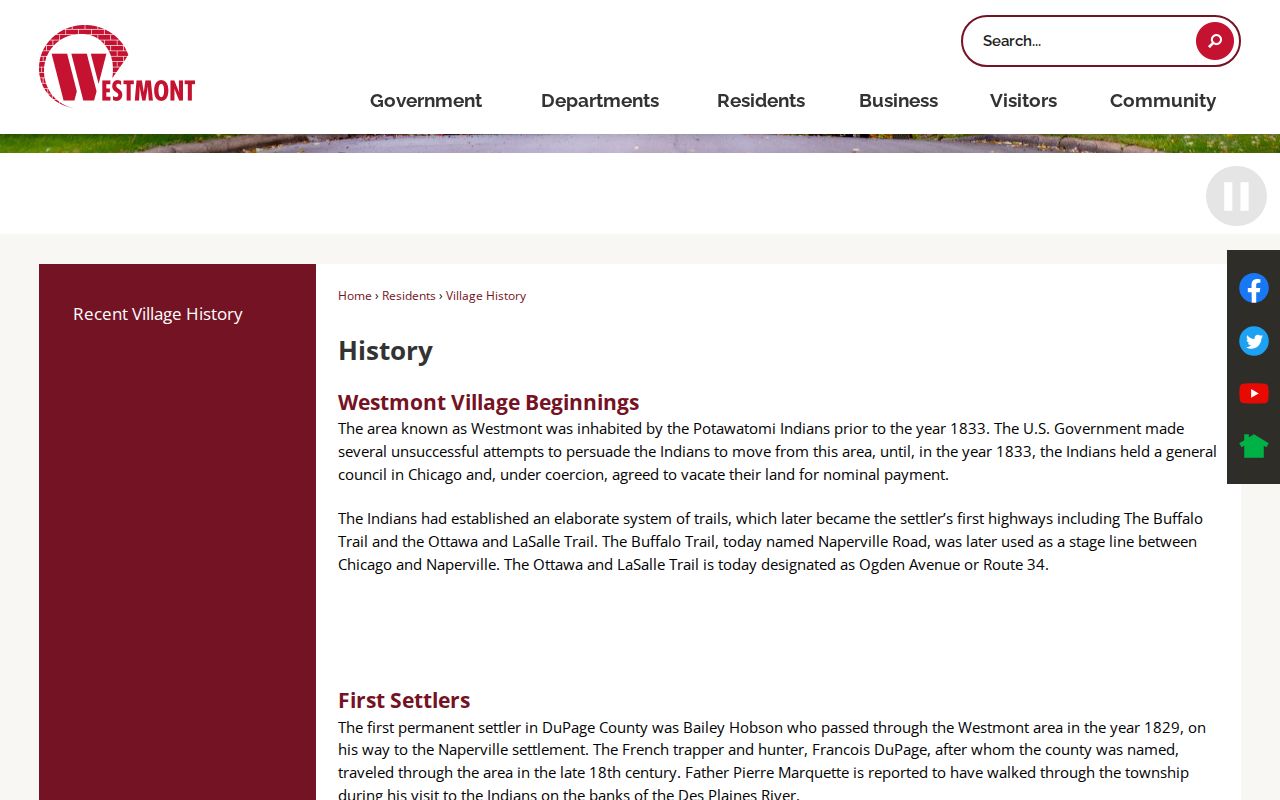
Westmont grew around the Chicago-Aurora rail branch and Gregg's Station. That rail-centered settlement pattern helps explain why early directories, papers, businesses, and addresses cluster near the line. The Village reports incorporation on November 10, 1921, while a State Archives name index records certification on March 24, 1925. Keep those as distinct civic dates when searching minutes and newspapers.
The Village history source provides the local context behind those record trails.
Gregg House adds another dated chain: built in 1872, saved by the Historical Society in 1976, and opened as a museum in 1981. Maps, directories, newspapers, and museum files can be read together rather than treating one address or year as the full story.
Check Westmont Record Dates
Every result needs four labels: the record date, the source's coverage, the date it was checked, and the custodian. The Recorder's web coverage varies by search key. Property and court portals showed maintenance or access barriers during research. A blank result during an outage says nothing about whether the underlying record exists. Call, visit, order a copy, or file a narrow request rather than treating a failed screen as final.
Official rolls are strongest within their stated purpose. Commercial people-finder data may blend stale addresses and same-name people, and those services are not linked here. Verify through the office that created the record. Illinois's Address Confidentiality Program may supply a substitute address for eligible survivors, while its official warning says property records have separate confidentiality limits.
Lawful use. Westmont records may support family history, estate work, civic research, and personal verification. Never use an address or identity record to stalk, harass, intimidate, or harm anyone.